The short answer
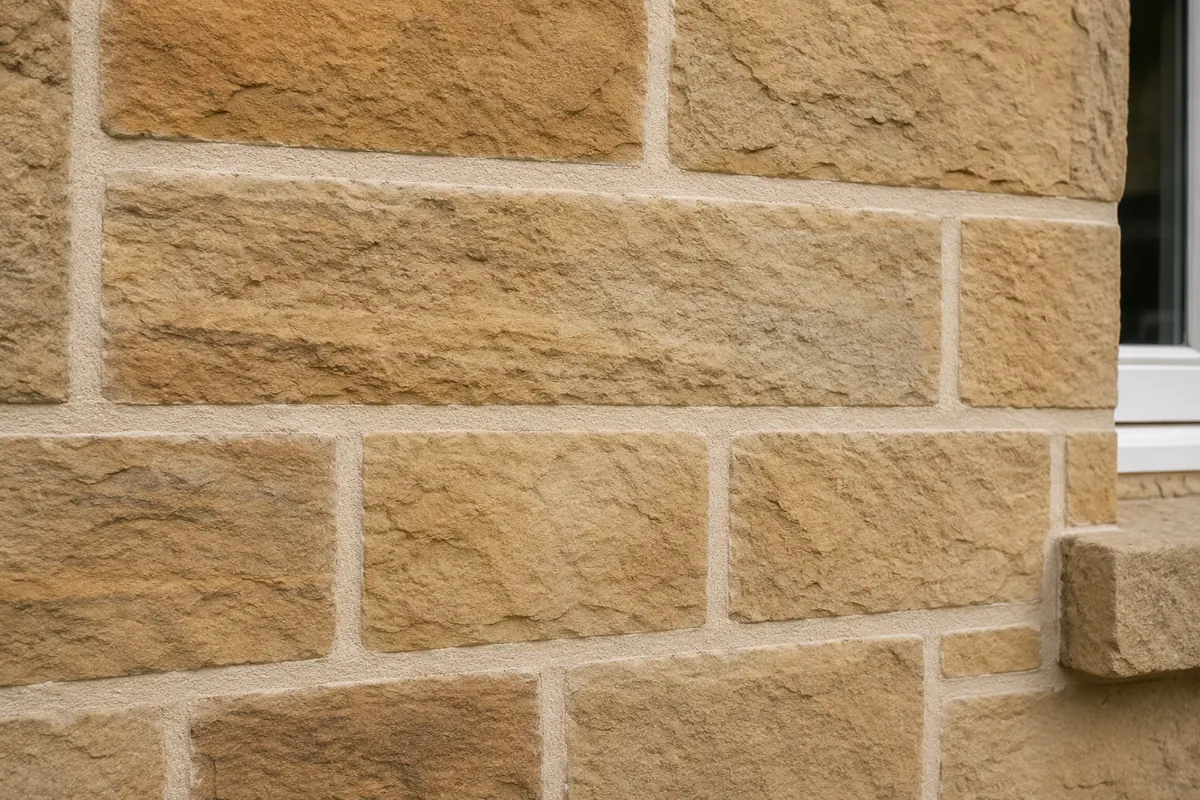
Historic Scottish buildings were built with soft, breathable lime mortar for a reason: the mortar was designed to be the weak, sacrificial part of the wall, protecting the far more valuable stone. When that lime is replaced with modern Portland cement, everything is reversed. The cement becomes harder than the sandstone around it and seals the wall shut, so moisture that used to escape now gets trapped inside and forces the stone to decay instead.
Mortar should always be softer and more breathable than the stone it sits between. Cement is neither — which is why it slowly destroys the very sandstone it was meant to repair.
Problem 1: Cement is harder than the stone
Sandstone is a relatively soft, porous stone. Traditional lime mortar was formulated to be even softer, so that any movement, weathering or stress was absorbed by the joints — the cheap, easily-replaced part of the wall — rather than the stone.
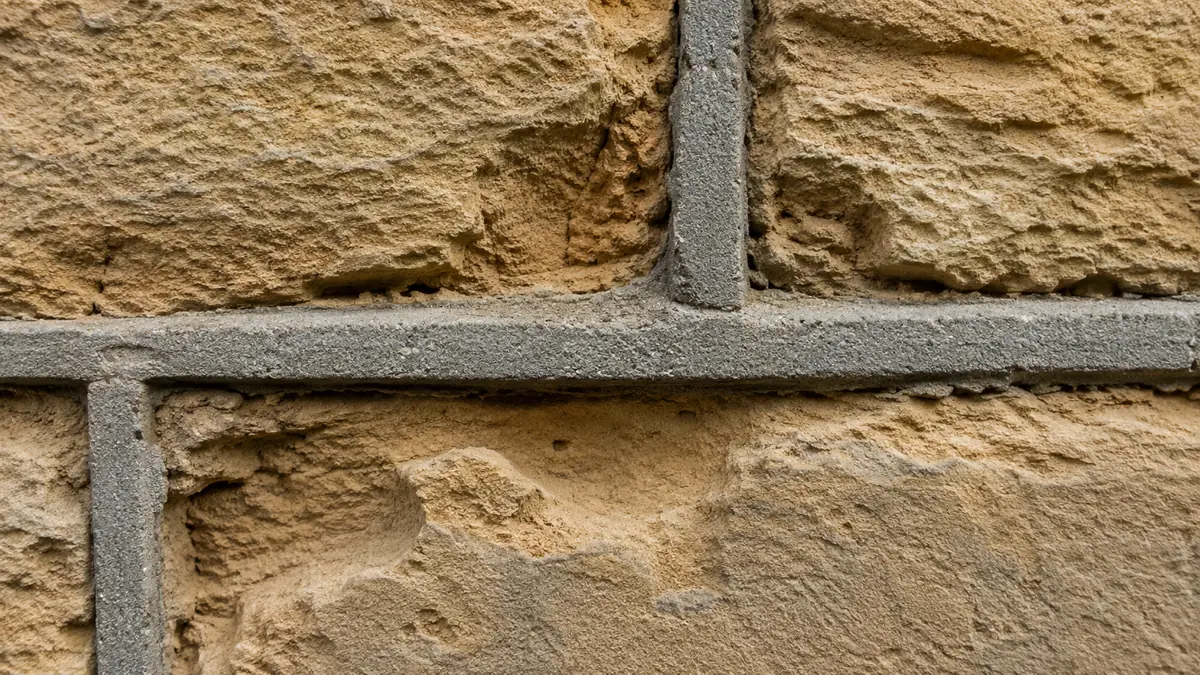
Portland cement flips that relationship. It is significantly denser and harder than sandstone. Now, when the wall expands and contracts with heat and cold, or shifts slightly over the seasons, the rigid cement joints no longer give way. Instead, the stress is transferred into the stone, and the softer sandstone begins to crumble and erode at the edges — while the hard cement joints stay perfectly intact. Restorers call this the erosion effect: you can literally watch the stone dissolve around joints that refuse to fail.
Problem 2: Cement traps moisture inside the wall
This is the most damaging problem of all. Old solid-wall buildings have no damp-proof course and no cavity — they manage water by letting it evaporate back out through breathable lime mortar and, historically, lime render or harling. The wall behaves like a lung: it absorbs a little moisture and releases it again.
Cement is effectively waterproof. When you point or render a breathable wall with it, you seal the surface. Water still finds its way in — through the top of the wall, around windows, or from rising damp — but now it cannot get back out. It becomes trapped in the masonry, where it causes a chain of expensive problems:
- Persistent internal damp and condensation on interior walls
- Mould growth and musty smells that redecorating never fixes
- Rotting of embedded timber lintels, joists and bond timbers
- Frost damage, as trapped water freezes, expands and spalls the stone face
The cruel irony is that many people cement-point a wall specifically to "keep the damp out" — and end up locking it in. Breathable lime systems solve the same problem the way the building was originally designed to: by letting the wall dry out naturally.
Problem 3: Salt damage — a Central Belt problem
In and around Stirling and the Firth of Forth, there is an added factor: soluble salts. Salts from the ground, from the air near the estuary, and from old repairs travel through the wall dissolved in water. In a breathable wall they harmlessly evaporate out at the surface.
Seal that wall with cement, and the salts are trapped just behind the surface, where they crystallise. As they crystallise they expand with enormous force — enough to blow the outer face clean off a block of sandstone from the inside. This "salt spalling" is one of the most common forms of severe stone loss we see on cement-repaired Central Belt properties.
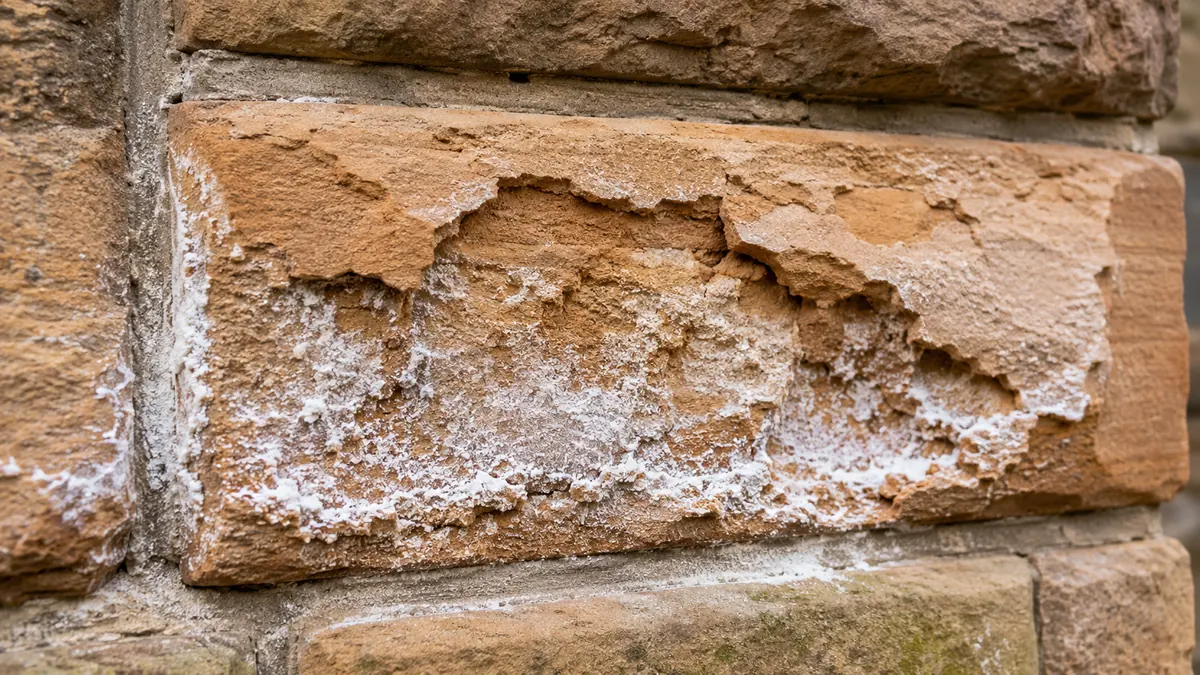
Near the Firth of Forth, salt crystallisation is a leading cause of sandstone failure. The right NHL grade of lime lets the wall shed both water and salt instead of storing them up for a destructive winter.
Cement vs lime mortar — side by side
Here is the same comparison our clients see when we survey a building. It comes down to three properties that decide whether your stone survives or slowly disappears.
| Property | Cement — The Problem | Lime — The Solution |
|---|---|---|
| Hardness | Too hard: Denser than the stone itself, so the sandstone erodes while the rigid joints survive — the "erosion effect." | Sacrificial: Softer than the stone by design, so the mortar takes the wear instead of the historic fabric. |
| Breathability | Sealed: Forms a waterproof barrier that traps moisture inside the wall — causing damp, rot and mould. | Open: Highly vapour-permeable, letting the wall breathe so trapped moisture can evaporate outward. |
| Longevity | Short-lived: Brittle and crack-prone; absorbs water it cannot release, accelerating stone decay. | Generational: Flexible and self-healing — hairline cracks reseal through carbonation over time. |
How to spot failing cement pointing on your home
You do not need to be a specialist to catch the early warning signs. On your next dry day, walk the outside of your property and look for:
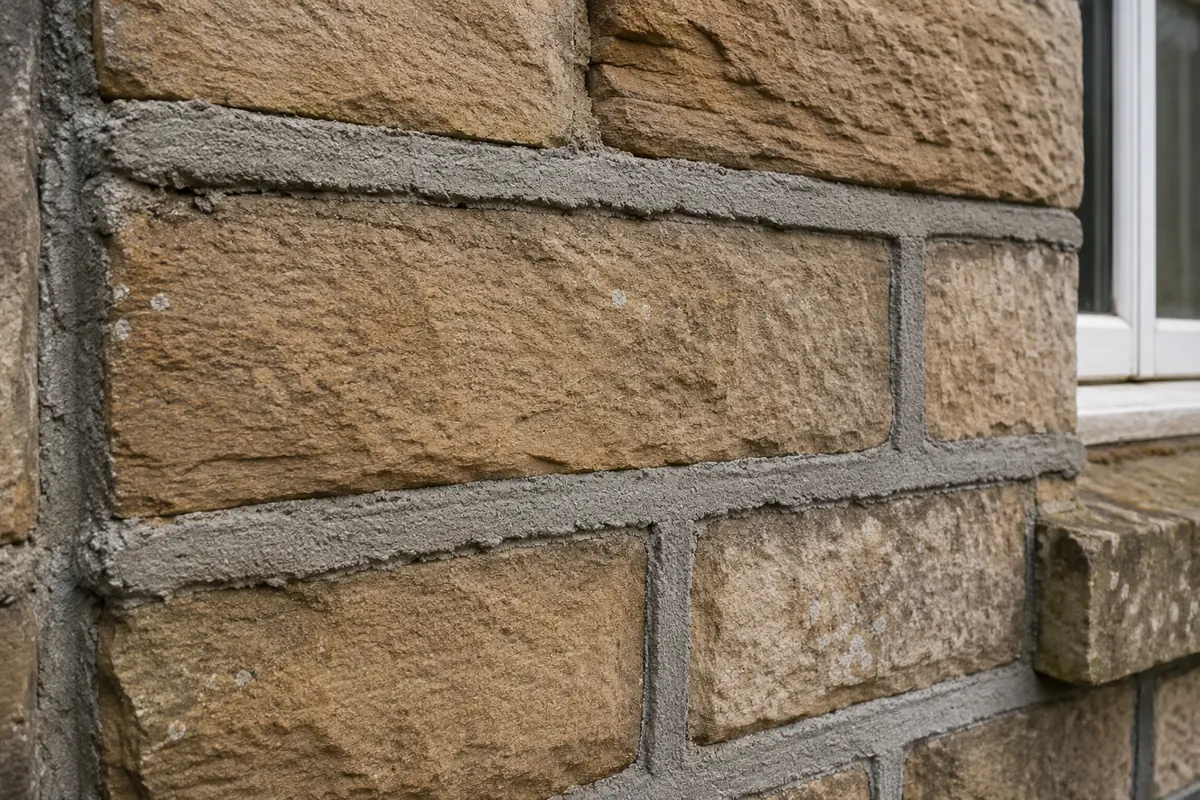
- Hard, grey, ribbon-like joints that sit slightly proud of the stone — a classic sign of cement "strap pointing"
- Crumbling or hollowed stone faces right next to joints that are still perfectly solid
- Flaking or powdery stone (spalling), especially low down or on the weather-facing side
- White powdery deposits on the stone surface — a tell-tale sign of salt movement
- Persistent internal damp on solid external walls that decorating never cures
If you recognise several of these, the cement is very likely doing active damage — and the longer it stays, the more irreplaceable stone is lost.
What to do if your home has cement pointing
The good news: caught early, this is entirely repairable, and the fix protects your building for generations rather than a handful of years. The correct approach is to carefully rake out the harmful cement without damaging the stone edges, and repoint with a lime mortar matched to your specific stone and exposure.
That matching is where the real expertise lies. Through scientific mortar analysis, the original sand and binder can be identified and reproduced, and the right NHL grade of lime chosen for how exposed your wall is to Scotland's driving rain. Done properly, the repair is invisible, breathable, and built to outlast anyone reading this.