Protect your property from cement damage and Scotland's harsh weather
with breathable, scientifically matched lime systems.
100% no obligation & guaranteed not a waste of time

Behind an apparently intact facade, modern materials like cement are often causing silent, devastating damage to the value and structural integrity of your property.
Portland cement is significantly harder and denser than the original stone. Moisture becomes trapped inside, leading to spalling, frost damage, and stone erosion — while the hard cement joints remain untouched.
When a wall is sealed with dense cement, evaporation stops. Moisture migrates inward causing dangerous mould growth, timber rot, and long-term structural weakening of the entire masonry bond.
Scotland's persistent rain and coastal salt are extreme stressors. Without the capillary action of lime mortar, absorbed water cannot be released quickly enough — saturating the masonry and dramatically accelerating decay.
"Small cracks today lead to massively expensive restoration tomorrow. Prevention costs a fraction of a cure."
The comparison to a lung is scientifically accurate: lime mortars actively regulate moisture — unlike modern dense materials that trap it inside.
Lime's open micro-structure (vapour permeability) allows moisture to travel outward through the wall. While cement traps water leading to rot and mould, lime ensures the structure dries quickly and naturally.
Lime accommodates minor structural and seasonal movement without cracking. It also self-heals: hairline cracks can reseal themselves through calcium carbonate deposition — protecting your investment automatically.
Roman structures built with hydraulic lime mortar still stand after 2,000 years. Lime binds CO₂ from the air during hardening and can be cleanly reused at end of life — a truly circular building material.
100% no obligation & guaranteed not a waste of time

| Property | Cement — The Problem | Lime — The Solution |
|---|---|---|
| Hardness | Too hard: Denser than the stone itself. The stone erodes while the rigid cement joints remain — the "erosion effect." | Sacrificial (protects stone): New mortar must always be softer than the stone to prevent damage to the historic fabric. |
| Breathability | Sealed: Forms a dense barrier trapping moisture in the masonry. Leads to moisture build-up, rot, and mould inside the wall. | Open: Highly vapour-permeable. Allows the building to "breathe" so penetrating moisture can safely evaporate outward. |
| Longevity | Short intervals: Brittleness creates micro-cracks that absorb but cannot release water — accelerating stone decay dramatically. | Decades of durability: Flexible and self-healing. Hairline cracks reseal through carbonation, protecting your building for generations. |
Your building deserves specialists — not generalists.
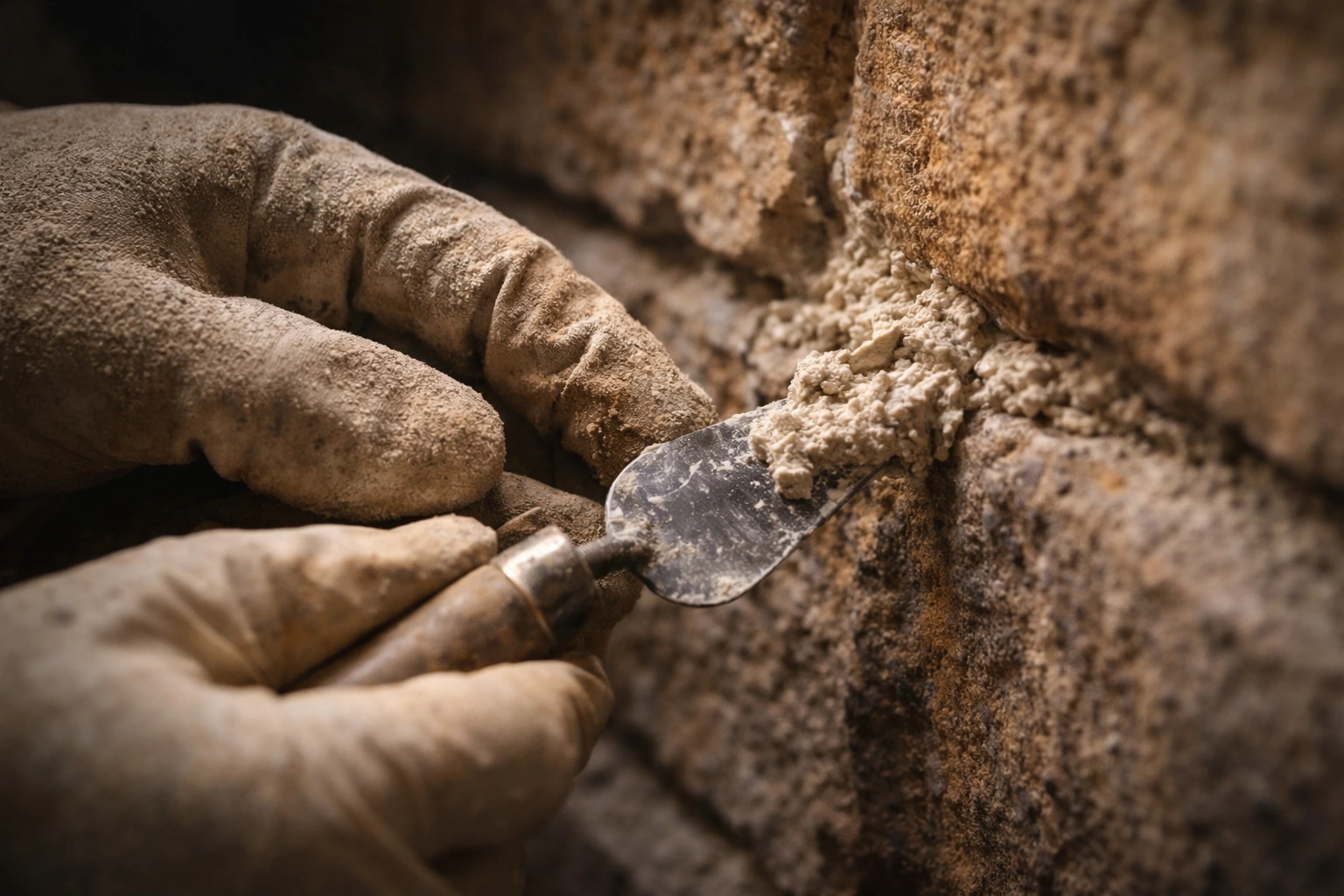
We replace harmful cement joints with "sacrificial" lime mortar — softer and more permeable than the stone. Using traditional pinning techniques, we stabilise the masonry and promote natural hardening from within.
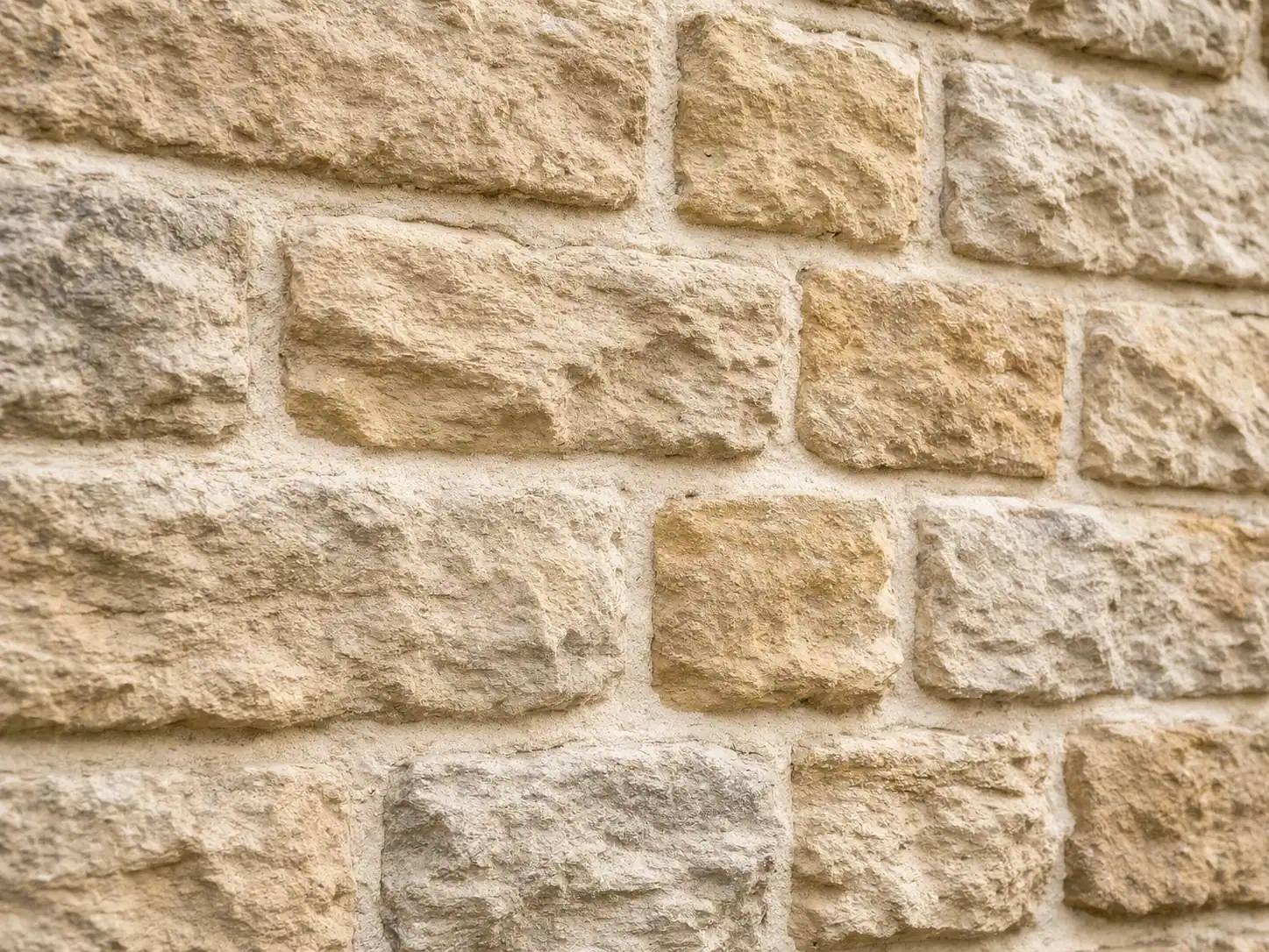
We stop stone decay and restore the natural breathability of your facade. Using traditional Scottish "harling" techniques, we provide maximum weather protection while preserving your building's historic character.
Our moisture-regulating lime plasters prevent mould and condensation on interior and exterior walls. We use only sharp, well-graded aggregates for crack-free, long-lasting surfaces that breathe.
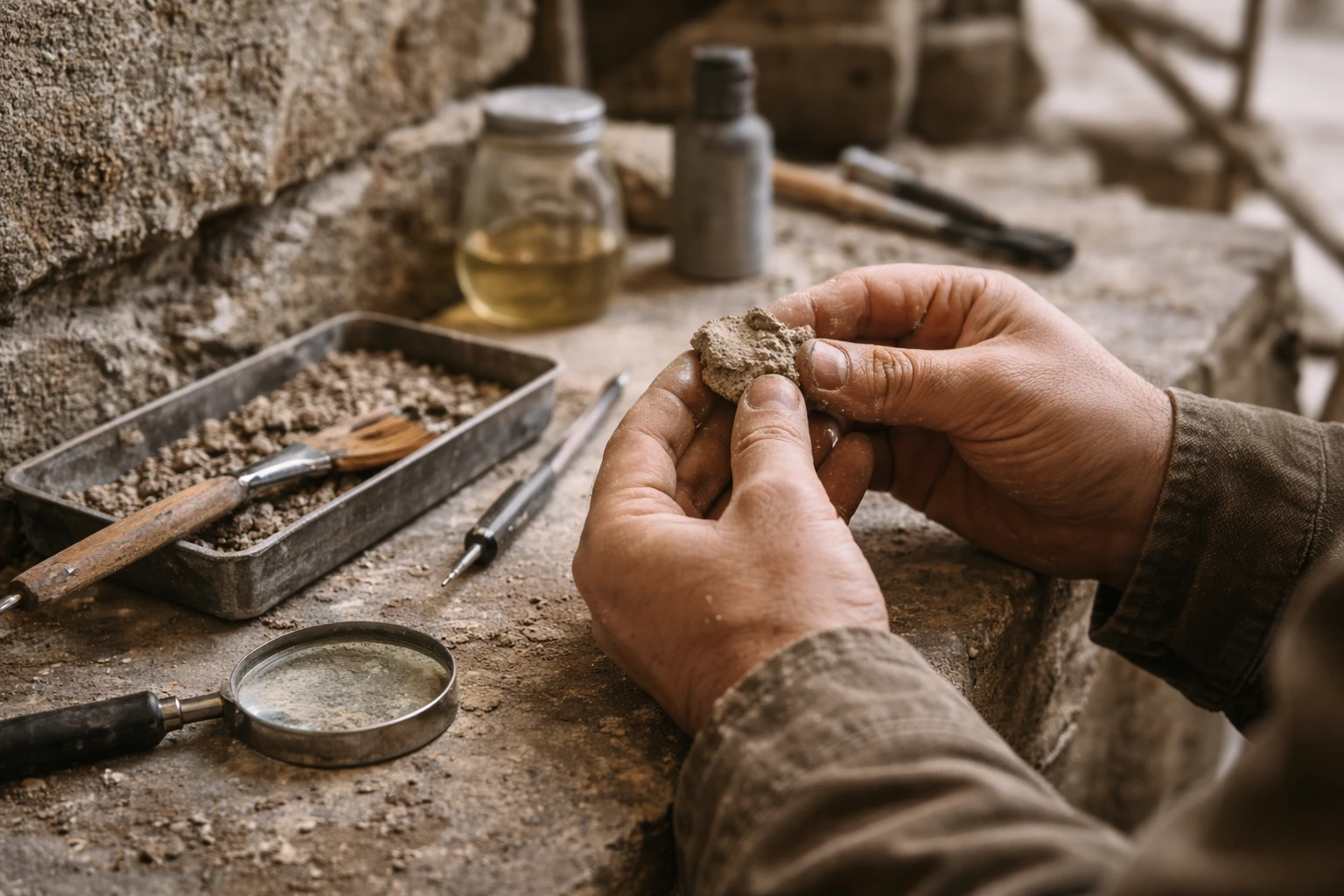
Through Acid Digestion, we isolate the original aggregates of your mortar. Using the Scottish Aggregates Database (600+ sand types), we reconstruct a perfect match in colour, texture, and technical specification.
We work strictly to best practices of building conservation, preserving the historic character and structural flexibility of listed properties — without the use of modern cement "poisons."
We dedicate ourselves almost exclusively to sandstone buildings and traditional masonry. We know: new mortar must always be a "sacrificial" layer — softer and more permeable than your stone.
We give you a 24-month quality guarantee on all lime works. Because lime stays flexible and accommodates micro-movements without cracking, you're investing in a solution that protects value for generations.
While others mix "by feel", our work is precision craftsmanship. We weigh all binders precisely by their Relative Bulk Density — never by volume — to guarantee consistent, never-failing mortar quality.
We work to the internationally recognised best practices of the Scottish Lime Centre Trust (SLCT) — the gold standard in historic building conservation. Your building is in the most qualified hands available.
We don't just do a visual inspection — we identify the true cause of deterioration and fix it properly.
Using Acid Digestion, we isolate the original aggregates of your facade. We also assess drainage and guttering to eliminate future moisture damage to fresh mortar. Goal: an exact technical and visual match to the original structure.
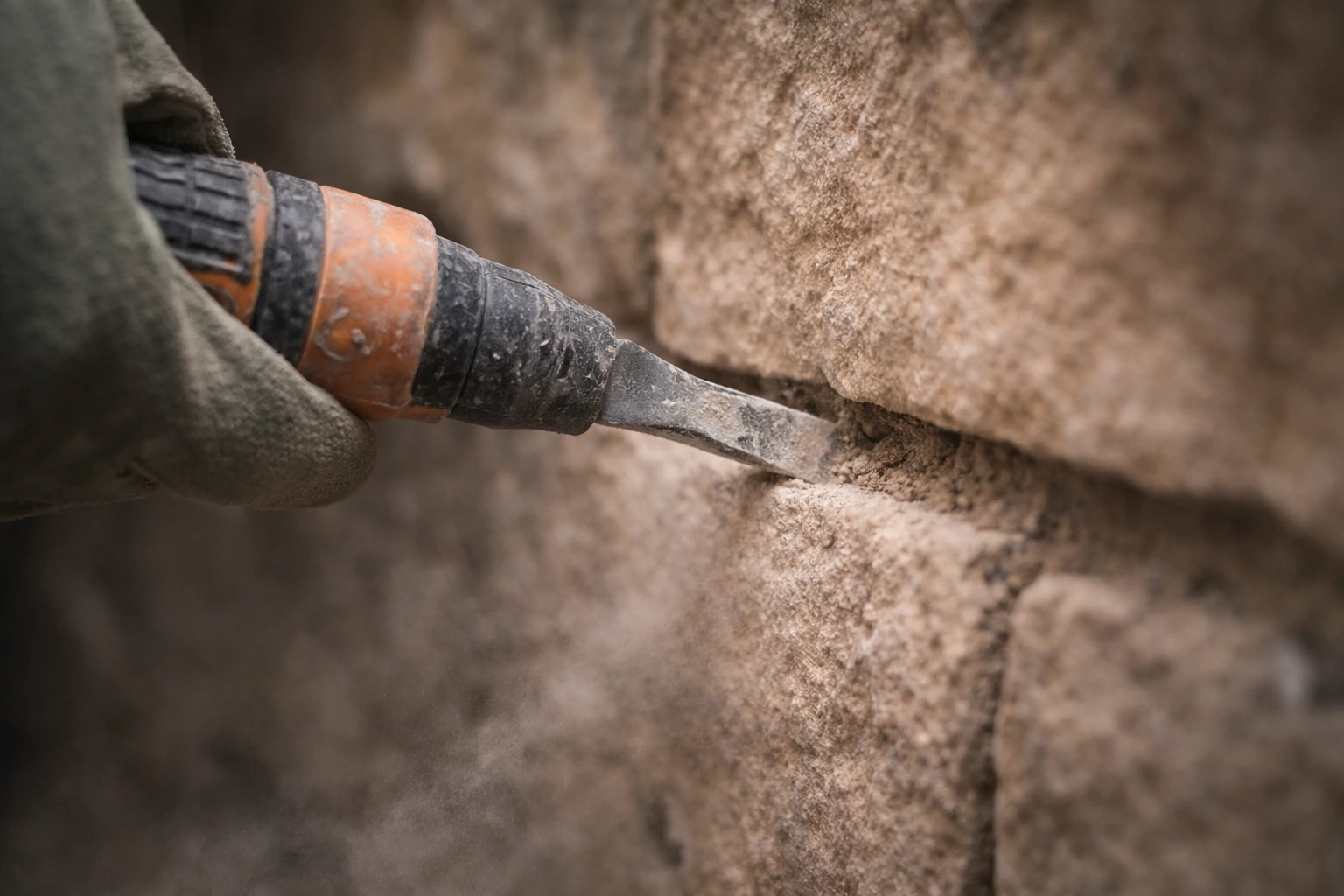
Removing harmful cement requires a surgeon's touch to protect the valuable sandstone edges. We carefully rake out cement without damaging stone. We then pre-wet the substrate to control suction and prevent the new mortar from drying too fast and cracking.
We work on the principle: the mortar must be the "sacrificial layer" for the stone. All binders are weighed precisely by Relative Bulk Density for consistent quality. Deep joints are filled with pinnings — small stone fragments that reduce shrinkage cracking and accelerate natural carbonation.
This critical phase determines the next 100 years of your facade. For 10 days, we actively protect the facade from wind, frost, and direct sun using specialist jute coverings. We lightly mist the mortar as needed to achieve full strength without shrinkage cracks.
100% no obligation & guaranteed not a waste of time
Many homeowners know the feeling: modern cement acts like poison for historic buildings. It traps moisture and destroys the stone from the inside out. That's why we work to the standards of the Scottish Lime Centre Trust.
We understand the stone and the weather of the Stirling region. Our work doesn't end with expertly mixed mortar — we understand the specific daily challenges facing Central Belt buildings.
Near the Firth of Forth, salts penetrate deep into stone pores. When cement is used, these salts become trapped and crystallise — creating massive internal pressure that explodes sandstone from within.
The Stirling region is known for "horizontal rain" and strong wind-chill effects. We select lime hydraulicity (NHL 2 to NHL 5) precisely based on how exposed your building is to driving rain and wind.
We have access to comprehensive data covering nearly all local sand types from over 200 Scottish quarries — helping us find the ideal match for your specific stone.
100% no obligation & guaranteed not a waste of time
Act now — before small cracks become costly restoration projects.
Your data is treated confidentially, will not be shared with third parties, and is used solely for your enquiry.
If you're not sure whether we can help, the best way to find out is to fill in our quick survey above so we can offer you a free damage assessment.
Take a minute and complete the form above — so we can work together to find out how we can help.